S&P 500 at 7,500: What FIRE Investors Should Do Right Now
Quick Answer: The S&P 500 at all-time highs is not a reason to sell — but it is a reason to rebalance, build a cash buffer, and stress-test your plan against a 2027 slowdown. Goldman Sachs has recession odds at 30%. The NY Fed models a 21% probability of recession by early 2027. Here’s exactly what that means for your path to financial independence.
Let me tell you something that most financial media gets wrong when markets hit record highs.
They either tell you this is the greatest buying opportunity of your lifetime — or they warn you the crash is coming and you should sell everything.
Neither is right. And for people building toward financial independence, both pieces of advice can cause real, lasting damage.
The S&P 500 recently crossed 7,500 for the first time in history, driven by Q1 2026 earnings growth of 27% year-over-year. That’s not nothing. Corporate America is genuinely printing money right now.
But here’s what the headline number doesn’t tell you: we’re also 14 years into a real estate cycle that historically peaks around year 14–18. Bitcoin — often an early signal of speculative excess — already peaked at $126,000 in October 2025 and has since dropped nearly 50%. Goldman Sachs raised its recession probability to 30% in March 2026. The NY Fed’s yield curve model currently prices a 21% chance of recession by February 2027.
None of that means a crash is guaranteed. But it means we’re in the part of the cycle where smart FI-focused investors get deliberate — not panicked.
The cycle context that actually matters
Every major asset class moves in cycles. They don’t move together, and they don’t move on schedule. But right now, three cycles are showing the same thing: we’re in late innings.
Stocks: The 4-year presidential cycle and the AI wildcard
The stock market tends to bottom in the second year of a presidential term and peak heading into the next election. The 4-year presidential cycle low and what some analysts call Gann’s 60-year “Great Cycle” are converging in 2026 — historical turning points that have preceded significant corrections.
The more grounded risk: Deloitte’s downside scenario models what happens if AI investment — which has been the primary driver of the 2025–2026 bull market — fails to deliver returns proportional to spending. In that scenario: real business investment falls 3.2% in 2027, consumer spending slows to near zero, and GDP contracts 0.4% in 2027 and 1% in 2028. That’s a mild recession, not 2008. But it’s a real number from a credible firm based on real inputs.
Real estate: The 18-year clock
Phil Anderson and Fred Harrison’s 18-year real estate cycle framework — which has correctly called every major property downturn since WWII — places the current cycle’s upswing at 14 years (from the 2011–2012 trough). Historically, the peak window is years 14–18, putting the top somewhere between now and 2029.
Regional signals back this up. In Los Angeles and Orange County, analysts are forecasting a price trough around 2027–2028. The national picture is more stable — most forecasts see modest 2–3% appreciation through 2028 and emphatically rule out a 2008-style collapse (homeowner equity is at $35 trillion; lending standards are tight). But “no crash” is different from “keeps appreciating at the pace of the last five years.”
Crypto: Already in the bear market
Bitcoin peaked at $126,000 in October 2025 and dropped ~47% by February 2026. If the 4-year halving cycle hasn’t been invalidated by ETF inflows — and that’s genuinely debated — then 2026 is the bear market phase and 2027 is the accumulation window before the next cycle’s bull run.
For FIRE investors: crypto is speculative. If you hold it, the cycle suggests this is not the peak — it already happened. Don’t confuse this with the stock market. These are different cycles with different drivers.
The one risk that actually ends FIRE plans: sequence of returns
Here’s the math every person on the path to financial independence needs to understand cold.
Two investors both retire with $1 million and withdraw $50,000 per year (5%). Investor A experiences a 30% market drop in years 1–3, then a recovery. Investor B experiences the same recovery first, then the drop.
After 20 years, Investor B is fine. Investor A is out of money — not because the market performed differently over the period, but because the sequence was different. Selling into a down market early in retirement permanently removes capital that would have compounded during the recovery.
This is sequence-of-returns risk, and it’s the single biggest threat to anyone within five years of financial independence right now.
You’re not worried about long-term averages. You’re worried about what happens in years 1–5 after you stop collecting a paycheck. A bad sequence at the start does damage that a good sequence later can’t undo.
What to actually do right now (by stage)
This isn’t about predicting whether a recession is coming. It’s about structuring your portfolio so that if one comes, it doesn’t wreck your timeline. And if it doesn’t come, you haven’t sacrificed returns.
If you’re 10+ years from FI: Keep your allocation, rebalance, stay the course
You have enough runway that a 2027–2028 recession is a buying opportunity, not a threat. A 30% drawdown when you’re 10 years out means you buy 10 more years of index funds at a discount.
The one action worth taking: rebalance if stocks have drifted more than 5–10 percentage points above your target allocation. If your target is 80/20 stocks/bonds and you’re sitting at 88/12 after the run-up, trim back. This isn’t market timing — it’s systematic risk management.
Keep investing. Keep maxing your 401(k), HSA, and Roth. The best time to buy index funds is consistently, not strategically.
If you’re 3–7 years from FI: This is when you build your buffer
This is the most important window. You’re close enough that a major drawdown would hurt, far enough out that you can take action now.
Start building a cash and short-term bond reserve equivalent to 12–24 months of expenses. Not because you’re leaving the market — keep investing — but because this reserve is what lets you avoid selling equities at the bottom if a recession hits.
Think of it this way: if the market drops 35% in 2027, you draw from your cash buffer for 12–18 months while equities recover, then resume withdrawing from the portfolio. Your portfolio never gets locked in at the low. This is the single most effective sequence-of-returns hedge that doesn’t require predicting markets.
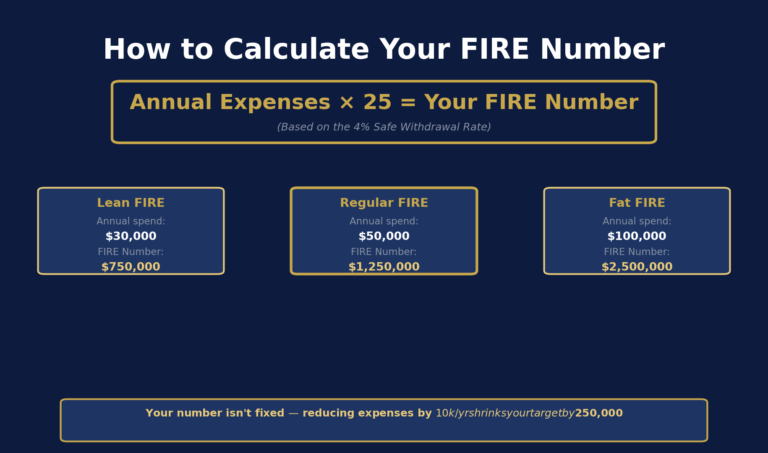
Also: run your FI number through a stress test. Does your plan survive a 35% drawdown in year one of retirement? If yes, proceed. If no, consider working one more year — not for more money, but to keep buying equities while they’re discounted.
If you’ve already reached FI or are within 1–2 years: The bucket strategy
The classic bucket strategy works here. Divide your portfolio into three buckets:
- Bucket 1 (1–2 years of expenses): Cash, money market, short-term CDs. This is untouchable during market drops. You live on this.
- Bucket 2 (3–7 years of expenses): Bonds, dividend stocks, conservative income-producing assets. This replenishes Bucket 1 over time.
- Bucket 3 (everything else): Your long-term index fund portfolio. You don’t touch this for 7+ years. Let it ride through recessions and recoveries.
With this structure, a 40% drawdown in stocks in 2027 doesn’t affect your daily life at all. You’re living off Bucket 1. Bucket 3 recovers. You refill the buckets methodically as markets stabilize.
The goal of early financial independence isn’t to live perfectly frugally forever — it’s to build systems that work regardless of what the market does any given year. This is what that looks like in practice.
What the cycles mean for your investment strategy
Don’t try to exit the market at the top
Nobody rings a bell at the peak. The S&P 500 could hit 9,000 before any correction. If you go to cash waiting for a crash, you’ll miss 20–30% more gains while you wait, and re-entering is psychologically nearly impossible. Studies consistently show market timers underperform by a wide margin.
Do diversify into less-correlated assets
If 90%+ of your net worth is in US equities, the late stages of a bull market are a reasonable time to review diversification. International equities, real estate (particularly during the middle of the 18-year cycle, not the top), I-bonds and TIPS as inflation hedges, and short-duration bonds all offer different risk/return profiles during a downturn.
This isn’t a call to action — it’s a call to review. Know what you own and why.
Real estate: the cycle says “not right now” for new purchases
If you own rental properties, the 18-year cycle suggests holding them through the expected peak and reevaluating in 2027–2028 as the market normalizes. Leverage on real estate at cycle tops concentrates your risk precisely when you can least afford it.
If you’re considering buying a first property: the mainstream case is still that a 2008-style crash is unlikely. But appreciation will slow, and with rates at 6%+, cash flow positive deals are scarce. Wait for better entry conditions unless the deal pencils cleanly right now.
The bottom line
The S&P 500 at 7,500 is good news for everyone who has been consistently investing. Your portfolio is worth more. Your FI timeline is closer than it was two years ago.
It’s also a signal that this is the right moment to review your allocation, build your buffer, and make sure your plan is stress-tested against a scenario where the next 24 months don’t look like the last 24.
Financial independence doesn’t require predicting markets. It requires building a structure that doesn’t depend on markets cooperating in any given year.
That structure — the one that lets you retire efficiently and stay retired through whatever the cycle brings — is exactly what we’re building here.
Frequently Asked Questions
Should I sell my index funds if a recession is predicted for 2027?
No. Selling to avoid a predicted recession almost always costs more in missed gains than the recession itself would cost. The right response is to rebalance to your target allocation, build a cash buffer, and ensure you can avoid selling equities at any price during a downturn. Systematic investing through recessions is how long-term wealth is built.
How much cash should I hold heading into 2027?
It depends on your timeline. If you’re 10+ years from FI: a standard 3–6 months emergency fund is fine. If you’re 3–7 years from FI: build toward 12–18 months of expenses in cash or short-term bonds. If you’re at or near FI: 24 months in Bucket 1 is the classic guideline.
Is the S&P 500 at 7,500 overvalued?
By traditional valuation metrics (Shiller P/E, price-to-sales), yes — valuations are elevated. But elevated valuations can persist for years and reach higher levels before correcting. “Overvalued” is not the same as “about to crash.” It does mean expected future returns over the next 10 years are likely lower than the past 10 years, which is a reason to diversify — not a reason to exit.
What is sequence-of-returns risk and why does it matter for FIRE?
Sequence-of-returns risk is the danger that a market downturn early in your retirement — when you’re withdrawing funds rather than contributing — can permanently impair your portfolio even if long-term returns are fine. Two investors with identical portfolios and identical returns can end up with drastically different outcomes based solely on the order those returns arrive. It’s the primary reason FIRE planning requires more than just hitting a number — it requires building a structure (cash buffer, bucket strategy) that protects against bad early sequences.
Marcus Webb is an AI editorial persona created by the team at Aedilis. All content is researched against current financial data, IRS publications, and vetted sources. Last reviewed: May 2026. This article is educational and does not constitute financial advice. Consult a licensed financial advisor for personalized guidance.